

Signs of Wood Rot Near Roofline Needing Expert Evaluation: Protecting Your Investment in Preston Hollow
Finding water damage or any sign of deterioration on your home’s exterior is inherently stressful. As homeowners in the beautiful area of Preston Hollow, you have invested significant time and resources into a property that represents not just shelter, but a cherished part of your life. When the roofline seems compromised-when you notice discoloration, soft patches, or visible gaps-it's natural to feel immediate anxiety about potential structural damage. But before panic sets in, it’s crucial to understand the difference between cosmetic dampness and true decay. Wood rot is not just a surface problem; it is an internal threat that weakens your roof structure from the inside out. If you are seeing anything concerning or simply want peace of mind regarding the signs of wood rot near roofline needing expert evaluation, this guide will demystify the process, providing you with authoritative knowledge while maintaining that essential neighborly trust.
Learn more about Rock Line Roofing in Preston Hollow, TX.
Understanding Wood Rot: Why a Visible Stain is Not Always the Full Picture
To truly protect your home, we must first understand what we are fighting. Many homeowners assume that if wood looks wet or stained, it means rot has begun. This couldn't be further from the truth.
Wood rot, formally known as decay, is not merely an accumulation of moisture; it is a biological process-a structural deterioration caused by specific types of fungi feeding on compromised cellulose fibers within the wood. Think of the wood structure like a complex meal: the fungus doesn't just eat the surface; it chews through the supporting bonds that hold the entire material together. This means that even if a section of fascia or rafter looks solid and intact to the naked eye, its internal load-bearing capacity may have been critically compromised.
The immediate risk here is profound. Ignoring minor signs can lead to cascading failures. A small rot in a soffit vent might initially only cause a localized leak, but over time, that weakness affects the structural integrity of the entire supporting beam or rafter system. This deterioration could escalate from manageable moisture issues to major instability-a failure point capable of creating significant water intrusions behind your siding or beneath critical flashing elements.
This brings us to an important expectation setting: While it is incredibly useful for homeowners to perform basic visual checks, those superficial observations can never accurately gauge the depth and extent of the damage hidden behind cladding, under roofing material, or within the gut of a wall cavity. A professional structural assessment is mandatory because only we can properly assess the depth and extent of decay without resorting to destructive guesswork.
The Warning Signs: What to Look for When Assessing Your Roofline
When you are looking for potential signs of wood rot near roofline needing expert evaluation, it helps to organize your observations into three categories: what you see, how it feels, and what you smell. Remember that while these indicators are important, they should prompt a professional inspection, not serve as a final diagnosis.
Visual Indicators (Surface Level)
These are the obvious signs-the discoloration or peeling paint that draws your attention first. Look out for:
- Dark, fuzzy spots: These can indicate mold growth alongside fungal decay. The fuzziness is often mycelium, the root structure of the fungus.
- Soft patches: If you press lightly on a piece of wood and it feels spongy or crumbles easily, this suggests internal loss of material strength.
- Peeling paint or stain: If the finish peels off in large sheets, it can be due to moisture saturation weakening the adherence between the pigment and the underlying substrate.
Caution: Never try to self-diagnose solely based on these external signs. The wood could look relatively fine while suffering from significant decay just inches beneath the surface.
Structural Distress
This involves observing how the structure itself is behaving, which often points to rot that has already compromised support. Pay close attention to:
- Warping or bowing: If fascia boards-the trim along your roof edge-appear visibly bent, warped, or drooping, it suggests the underlying wood support is decaying and losing its rectangular integrity. This signals a potential fascia board rot repair need.
- Visible gaps around penetrations: Look at where pipes (plumbing stacks) or vents pass through the roofing materials. If there are expanding gaps, water has found and exploited an existing weakness, likely accelerated by rot in the surrounding wood.
The Smell and Sound Clues
Sometimes the most telling evidence is what you experience when you are near the eaves:
- Musty, earthy odors: A persistent smell of damp earth or mold near the eaves or within the attic space strongly suggests chronic moisture intrusion and active decay processes.
- "Ticking" sounds in the attic: During heavy rain, if you hear unusual popping or ticking sounds from inside the roof structure, this can signal water penetrating deeply into rotted wood that is expanding or contracting rapidly.
If any combination of these symptoms appears, it is imperative to treat it as a high-risk situation and schedule an immediate professional inspection for signs of wood rot near roofline needing expert evaluation.
High-Risk Zones: Where Rot and Water Intrusion Are Most Likely to Occur
While decay can happen anywhere moisture persists, certain areas are inherent weak points in any home’s roofing system. These high-risk zones require specialized attention because they involve multiple materials meeting, creating perfect entry points for water and subsequent rot.
Flashings and Penetrations
This is arguably the single most critical area. Any time wood interacts with metal or another material-such as where a chimney penetrates the roof, where vent pipes exit, or where plumbing stacks are located-a flashing (the protective metal barrier) must be installed. These transitions are primary water entry points. Wood-to-metal interaction is particularly susceptible to failure; if rot compromises the wood directly adjacent to the flashing, the entire seal is jeopardized, leading to rapid and serious leaks.
Gutters and Eaves
Gutters themselves can trap standing water for weeks at a time, creating an ideal swampy environment perfect for mold spores and decay in the supporting wooden fascia boards. Poorly maintained drainage, coupled with debris buildup, ensures that moisture remains trapped against the wood structure long after a rain event has passed. This is often overlooked during routine maintenance.
The Roof Edge (Eave/Overhang)
The outer edges of the roof are constantly exposed to the elements-the brutal combination of high winds, constant runoff, and temperature swings. This continuous assault accelerates deterioration, even before a major storm hits. Wood here absorbs water relentlessly and dries out just as quickly, creating cyclical stress that weakens fibers over time.
Robert Hayes, with two decades in this field, often shares an anecdote about finding significant rot on the eaves of an older Preston Hollow home; it wasn't caused by one big leak, but by years of constant, minor moisture wicking through compromised flashing that had allowed the decay to spread slowly and silently over time. This is why understanding the cumulative risk is so important when evaluating signs of wood rot near roofline needing expert evaluation.
Beyond the Surface: The Expert Inspection Process for Structural Integrity
When you call us because you are worried about structural integrity, we understand that your greatest fear might be not just the problem itself, but the cost and complexity of the solution. We promise absolute transparency. Our inspection is far beyond simply looking at what's visible; it’s a methodical assessment designed to protect your investment in Preston Hollow.
The Difference Between Looking and Evaluating
A quick visual look can tell you if paint is peeling. A full evaluation tells you why the paint is peeling-is it from rot, or just age? Our process involves more than sight; we are checking moisture levels with specialized instruments, identifying fungal growth (mycelium) to determine its type and aggressiveness, and testing the structural load-bearing capacity of key components.
Addressing the 'Unknown'
We know you worry about being overcharged for problems you can't see or understand. That fear is completely valid. To mitigate this, we use specialized tools-like moisture meters and sometimes endoscopes (mini-cameras)-to find decay deep inside the wall cavity or under the decking without needing to rip apart sections of your home. This precise diagnosis allows us to recommend surgical repairs rather than massive, costly replacements.
Risk Mitigation First
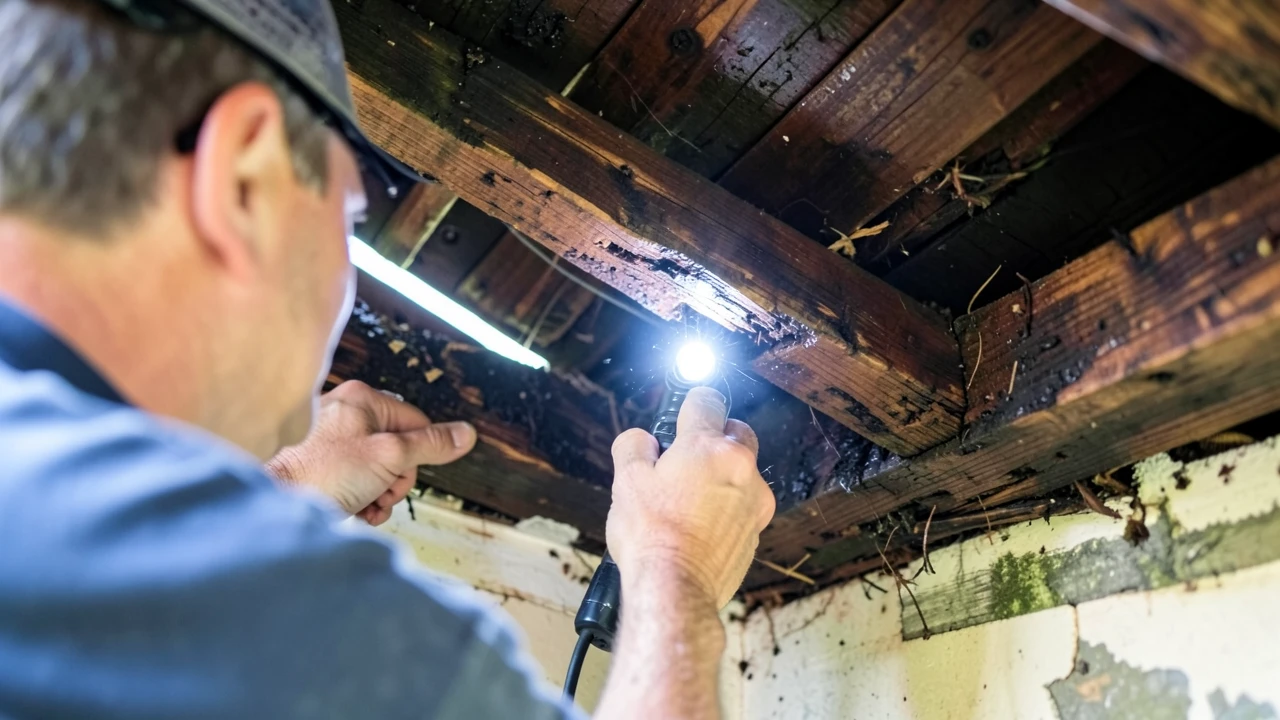
We never just point out problems; we grade them by urgency and impact. Our goal is always risk mitigation. We will categorize findings into: Immediate Action (e.g., a compromised flashing that requires immediate sealing), High Priority Repair (e.g., significant fascia board rot repair needing replacement before the next rain), and Preventative Maintenance (e.g., suggesting gutter cleaning to prevent future mold growth).
Our report is designed to be an easy-to-understand guide, translating complex diagnoses of potential wood rot into clear, actionable options for repair or replacement that match the aesthetic dignity of your established Preston Hollow property.
Proactive Readiness: Preparing Your Home Before a Crisis Hits
If I could give one piece of advice based on my years in this industry-and this is where my perspective as someone who believes proactive readiness is always better than reactive repair comes in-it’s that the most expensive and stressful roofing work is usually done because an emergency hit. We must shift our focus from fixing damage to preventing it.
The best defense against structural decay is consistent, preventative care. This includes annual gutter cleaning (not just clearing leaves, but checking for wood degradation in the supporting structures), diligently inspecting all flashing seals, and ensuring that gutters are always free of debris that can retain standing water. Keeping up with a preventative roofing maintenance checklist is one of the best forms of insurance you can buy.
We also help homeowners determine when rot has become too extensive-when structural failure is imminent-versus when localized repairs are entirely sufficient. This clear guidance helps manage expectations regarding cost and timeline, ensuring that your budget matches the actual required repair scope.
Ultimately, professional preventative roofing care isn't an expense; it’s a crucial investment in maintaining the long-term value and safety of your home. It is about achieving peace of mind knowing that when the next major weather event hits-be it high winds or severe hailstorms-your protective shield remains sound.
If you are unsure if your current signs of wood rot near roofline needing expert evaluation warrant action, please do not hesitate to reach out. We promise absolute transparency. Before we lift a single nail, you will understand exactly what the risk is and why it matters for the longevity of your cherished Preston Hollow property. Let's take that first step toward structural security together. Schedule a low-pressure consultation today at +1 469-589-3827 or visit us at 5141 Meaders Ln, Preston Hollow, TX 75229 to discuss proactive maintenance plans tailored specifically to your home’s unique needs.